
Meta Description: Wondering what overlocking actually does to fabric? Discover the real purpose, key benefits, and why it beats zigzag stitching for a professional finish.
The first time I held two fabric edges side by side—one finished with a zigzag stitch, the other done on an overlocker—the difference was immediate. The overlocked edge was flat, clean, and completely enclosed. By comparison, the zigzag edge looked unfinished, with threads already beginning to curl away from the fabric.
Many sewers have heard of overlocking, seen overlockers in shops or videos, and still aren’t entirely sure what the machine actually does—or whether they genuinely need it. This article answers both questions directly.
What Is Overlocking and What Does It Actually Do?
Overlocking is a machine process that trims the fabric edge, encloses the raw edge with looped thread, and prevents fraying—all in a single pass.
Mechanically: a built-in knife trims the excess fabric as it feeds through. At the same time, a system of loopers and needles wraps thread around the freshly cut edge, creating a secure, enclosed finish. Nothing about the raw edge is left exposed.
An overlocker is not a replacement for a standard sewing machine. The two work together. Your sewing machine handles construction — zips, topstitching, buttonholes. Your overlocker handles edge finishing and seam neatening. They are partners in garment making, not rivals.
How Does Overlocking Affect the Fabric Edge?
The knife removes the uneven raw edge first. You’re not just stitching over a messy edge — you’re cutting it clean before the thread encases it. The result is a seam allowance that is consistent in width, stable, and tightly enclosed.
Compare that to a zigzag stitch. A zigzag stitches across a raw edge without trimming it. The edge can still fray over time, the finish sits thicker and less flat, and coverage is less consistent. Overlocking produces a tighter, more even finish that sits flatter against the fabric — which matters enormously when garments go through repeated washing and wear.
One practical example: the rolled hem. On a standard machine, a rolled hem on lightweight fabric is fiddly and time-consuming. On an overlocker, it’s a straightforward setting change. If you’ve ever been frustrated trying to achieve a neat, narrow hem on chiffon or fine jersey, the overlocker almost entirely resolves that frustration.
Does Overlocking Make Garments Last Longer?
Yes — and this is one of the most practical reasons to use an overlocker rather than alternative finishing methods.
Because the overlocked seam is tighter and the edge is fully enclosed, there is significantly less risk of seam failure during wear and washing. The thread system wraps around the fabric rather than simply stitching across the top, giving it far more structural integrity.
Here’s how the main finishing methods compare:
- Pinking shears — slow, decorative rather than truly protective, limited fraying resistance
- Zigzag stitch — faster than pinking shears, but doesn’t trim the edge or enclose it fully
- Raw edges untreated — suitable only for non-fraying fabrics such as fleece
- Overlocking — the only method that trims, encloses, and secures in one pass
A garment that holds together at the seams gets worn more. That matters whether you’re making something for yourself or for someone else.
What Fabrics Can You Overlock?
Overlockers are not specialist machines limited to one fabric type. They work across a wide range of weights:
- Lightweight: Chiffon, fine jersey, silk, organza
- Medium-weight: Cotton, linen, poplin, denim shirting
- Stretch: Jersey, ponte, ribbing, Lycra blends
- Heavier: Canvas, denim, upholstery-weight (depending on machine quality)
The one caveat: extremely thick or heavy materials can push the limits of lighter domestic machines. If you’re regularly working with heavy canvas or multiple layers of denim, machine quality matters. For most home sewers—working with jersey, cotton, linen, and lightweight wovens—an overlocker will handle everything without issue.
Is Overlocking Actually Difficult to Do?
The most common thing I hear from people who haven’t used an overlocker is that it looks complicated. The knife, in particular, makes people nervous. That fear is largely misplaced.
The knife is a feature, not a hazard. It’s built into the machine to speed up and improve edge finishing. If you can use a sewing machine, you can use an overlocker—the learning curve is shorter than most people expect, and I’ve seen complete beginners get comfortable in a single session.
The one genuine challenge is threading. That’s where most people struggle, and it’s worth being honest about rather than glossing over.
Threading: The One Real Challenge
Threading an overlocker is more complex than threading a sewing machine. It involves multiple threads, loopers, and a specific sequence — get it wrong and you’ll spend more time re-threading than sewing. It’s the number one source of frustration I hear from new users.
The practical solution is to choose a machine that makes threading easier. Two ranges stand out:
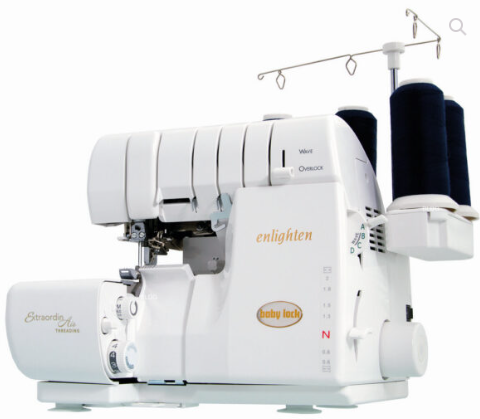
- Baby Lock range — features automatic tension, which significantly reduces threading difficulty
- Brother Air 3000 — uses an air-threading system on the loopers, threading the machine at the press of a button
If you can afford a machine that helps with threading, it will make a real difference to how often you use it. Threading anxiety is not a reason to avoid overlocking — it’s a reason to be thoughtful about which machine you choose.
If you’re new to overlockers and want guidance before committing, sewing lessons from an experienced specialist can make an enormous difference in getting started confidently.
The Biggest Mistake Sewers Make When Buying an Overlocker
Buying too cheap is the biggest mistake I see, and I say that with full respect for anyone working to a budget.
The logic usually goes: “I’m not sure how much I’ll use it, so I’ll spend as little as possible.” The result is often a machine that is frustrating to thread, inconsistent in tension, and unpleasant to use — so it gets put away and never touched again. That’s not a saving. That’s money spent on something that solves nothing.
A decent-quality machine is more enjoyable to use, so you use it more. That means more garments finished properly, more skills developed, and far greater value over time. Better engineering improves tension consistency, stitch evenness, and smooth knife action. For more on what to look for, choosing the right sewing machine follows similar principles.
Overlocking vs Zigzag Stitch: Which Is Better?
Here’s what each method actually does to the fabric edge:
| Method | Trims edge? | Encloses edge? | Speed | Durability |
|---|---|---|---|---|
| Zigzag stitch | No | Partially | Moderate | Lower |
| Overlocking | Yes | Fully | Fast | Higher |
Zigzag is a valid option when an overlocker isn’t available. But for anyone serious about garment making—or anyone who wants their finished work to look and last like commercial garmentsdo —overlocking is the superior finish. The overlocker is purpose-built for this task in a way a standard sewing machine simply is not.
If you’ve been wondering whether you’re ready to try one, the answer is yes: beginners can absolutely use an overlocker with the right guidance and the right machine.
Ready to Get More From Your Sewing?
What overlocking does to fabric is straightforward once you understand the mechanics: it trims, encloses, and secures the edge in a single pass — faster and more durable than any alternative method.
The main things to take away: invest in a decent machine, don’t let threading put you off, and try it. Once you do, going back to zigzag will feel like a step backwards.
For anyone ready to explore machines, browse the full range at Sewing Direct — lifetime support comes with every purchase.