Best Brother Sewing Machine for Beginners: My Recommendations

Best Brother Sewing Machine for Beginners: My Recommendations

If you’re looking for the best Brother sewing machine for beginners, there isn’t one machine that I would recommend to absolutely everybody.

When somebody comes into our shop looking for their first sewing machine, the first thing I want to know isn’t how many stitches they want or which machine has the longest list of features. I want to know what they want to sew, how much sewing experience they already have, and what they’re comfortable spending.

I’ve sold, demonstrated, serviced and repaired sewing machines for many years, and Brother is a range that I have a lot of confidence in recommending. They’re reliable, well made, straightforward to use and, importantly, there’s a really good progression through the range.

For a complete beginner, my recommendations would be:

But spending more doesn’t automatically mean you’re buying the right machine. Here’s how I would help you choose.

What Should a Beginner Look for in a Sewing Machine?

The first question I ask a customer is:

What do you actually want to sew?

There’s a big difference between somebody who has never sewn before and thinks, “I’d quite like to give sewing a go,” and somebody who has already been sewing for a while on a basic machine and now wants to develop their skills.

Budget matters too.

If sewing is a completely new hobby, you might understandably not want to spend £500 or £600 on your first machine. You don’t yet know whether you’ll still be sewing in a year’s time.

On the other hand, if you already know you’re going to use the machine regularly, buying something slightly better at the beginning can make a lot of sense.

That’s why I don’t believe there’s one universal “best sewing machine for beginners.”

There is a best machine for you and your budget.

Why I Recommend Brother Sewing Machines for Beginners

We don’t just sell sewing machines. We also service and repair them, which gives me a slightly different perspective when recommending a machine.

I see what happens to machines after they’ve been used for a few years.

As a whole range, I’ve found Brother sewing machines to be extremely reliable. They’re well made, easy to use and straightforward for us to maintain and service.

I’ve seen plenty of people buy a very cheap sewing machine because they’re just starting out, only to regret it later.

Sometimes buying the cheapest possible machine can actually make learning more difficult. If the machine isn’t pleasant to use, a beginner can easily assume that they’re doing something wrong when the machine itself is part of the problem.

That’s one of the reasons I like the Brother range.

Even at the beginner end, you’re getting a proper sewing machine that you can learn on and enjoy using.

Best Brother Sewing Machine Under £300 – Brother Innov-is 15

If somebody comes into the shop with a budget of around £300 and wants their first sewing machine, the Brother Innov-is 15 is my go-to machine.

At around £299, I think it’s a fantastic beginner’s machine.

It’s simple, easy to understand and gives you the features you actually need when you’re learning without overwhelming you with things you’re unlikely to use.

Why I Recommend the Brother Innov-is 15

The Innov-is 15 gives you:

  • 16 built-in stitches
  • Adjustable sewing speed
  • Needle up/down
  • Start/stop button
  • Easy top-loading bobbin
  • Simple computerised controls

For me, features such as adjustable speed and needle up/down are far more important to a beginner than having hundreds of decorative stitches.

Being able to slow the machine down while you’re learning gives you much more control.

Needle down is another feature that you might not appreciate when you first start sewing, but once you’ve used it, you’ll quickly understand why it’s useful. It’s particularly handy when turning corners or repositioning your fabric.

The start/stop button also means you can sew without using the foot control if you prefer.

The Innov-is 15 isn’t trying to be an all-singing, all-dancing sewing machine. It gives you the useful features you need in a machine that’s very easy to get along with.

For someone genuinely starting from scratch with a budget of around £300, this is where I would start looking.

What If My Budget Is Under £200?

You can certainly buy a Brother sewing machine for less.

At around £169, something like the Brother LX25 is a very straightforward, easy-to-use machine.

There’s nothing wrong with it.

If your budget is strictly under £200 and you simply want a machine to learn the basics, it can do the job.

However, if you asked me what I would personally recommend, I would encourage you to consider spending a little more and moving up to the Innov-is 15 if your budget allows.

Why?

Because you’re moving into a machine with features that are going to make learning easier and give you more room to develop.

I’d rather see somebody buy a machine that they’re going to enjoy using for a reasonable length of time than save money initially and quickly find themselves wanting to upgrade.

Best Brother Sewing Machine Around £450 – Brother Innov-is A50

If you’ve got around £450 to spend, my recommendation changes to the Brother Innov-is A50.

This is a definite step up from the Innov-is 15.

It’s still very approachable for somebody relatively new to sewing, but you’re starting to get features that you’ll appreciate more and more as your sewing develops.

Why Choose the Brother Innov-is A50?

With the A50 you’re getting features including:

  • A larger selection of stitches
  • Adjustable sewing speed
  • Needle up/down
  • Automatic tie-off
  • Improved needle threading
  • Top-loading bobbin
  • Easy-to-use computerised controls

One thing I particularly like as you move through the Brother range is the improved needle threader.

A needle threader might not sound like something that should determine which sewing machine you buy, but it’s something you’re potentially going to use every time you sit down at your machine.

The easier Brother makes those everyday jobs, the more enjoyable the machine becomes to use.

At this price, you’re also buying something with considerably more growing room than a very basic starter machine.

Best Brother Sewing Machine Around £500 – Brother Innov-is A65

If your budget will stretch to £499, I’d go for the Brother Innov-is A65.

For me, this is where things become particularly interesting for a beginner.

You could buy the A65 as your first sewing machine, learn on it and potentially find that it’s one of the last sewing machines you ever need to buy.

That’s a big difference compared with buying a basic machine purely to get started.

What Makes the Brother A65 Worth the Extra Money?

As well as the features you’d expect as you move through the Innov-is range, the A65 introduces the automatic thread cutter.

Finish sewing, press the cutter button and the machine cuts the threads for you.

Do you need an automatic thread cutter as a beginner?

No.

Is it nice to have?

Absolutely.

And that’s really the point of stepping up to the A65.

You’re no longer buying purely for what you need during your first few weeks of sewing. You’re buying features that you’ll appreciate as you become more experienced.

You still get the important basics such as:

  • Adjustable sewing speed
  • Needle up/down
  • Easy top-loading bobbin
  • Improved needle threading
  • Automatic functions
  • Larger stitch selection

But you’ve now got a machine with significantly more growing room.

If somebody has a budget of £500 and asks me which Brother beginner sewing machine I’d choose, the A65 would be my recommendation.

Should I Buy the Brother A50 or Spend More on the A65?

This is where I’d look at the difference in price rather than simply comparing specifications.

If your budget comfortably stops around £450, buy the A50. It’s a fantastic machine.

But if you’re looking at an A50 and can comfortably stretch to the A65, I’d seriously consider spending the extra money.

The A65 gives you that automatic cutter and moves you another step towards a machine you’re unlikely to quickly outgrow.

That’s important.

When you’re buying your first machine, it’s easy to concentrate entirely on what you need today.

I prefer to think about what you’re likely to want once you’ve been sewing for six months, a year or several years.

What If I Have Around £600 to Spend?

If your budget reaches approximately £600, I’d then start looking at the Brother Innov-is A150.

This moves you further into Brother’s computerised range and gives you a much bigger array of stitches and functions.

It’s a lovely machine.

Why Consider the Brother Innov-is A150 as Your First Machine?

The biggest argument for buying something like the A150 isn’t that a beginner needs every feature immediately.

You probably won’t.

It’s that you’re buying a machine with an enormous amount of room for you to develop.

You can start with straightforward sewing and learn the basics, but the machine has the capability to follow you as you become more adventurous.

For somebody who already knows that sewing is going to become a serious hobby, that can make much more sense than deliberately buying a basic machine and planning to replace it later.

You’re very unlikely to sit down with an A150 six months later and think, “I’ve already grown out of this.”

Which Sewing Machine Features Actually Matter for a Beginner?

Manufacturers can give you enormous specification lists, but when I’m helping somebody choose their first machine, there are a few features I pay much more attention to.

Adjustable Sewing Speed

This is one of my favourites for somebody learning.

You can physically limit how fast the machine will sew.

Rather than pressing the foot control and suddenly disappearing down the fabric at full speed, you can slow everything down and concentrate on controlling your stitching.

As your confidence improves, increase the speed.

Needle Up/Down

Needle up/down allows you to tell the machine where you want the needle to stop.

Having the needle stop in the fabric is particularly useful when you’re turning a corner because the needle effectively holds your position while you lift the presser foot and turn the fabric.

It’s a relatively simple feature, but it’s one I think is genuinely useful.

A Good Needle Threader

This becomes increasingly important as you move through the Brother range.

Threading a needle isn’t the exciting part of sewing.

Anything that makes setting up the machine quicker and easier means you can spend more time actually sewing.

Top-Loading Bobbin

Brother uses a top-loading bobbin system across these machines, and I really like it for beginners.

It’s straightforward, visible and easy to understand.

Again, it’s about removing unnecessary complications when somebody is learning.

Automatic Thread Cutting

This is more of a luxury than a beginner essential.

It’s one of the reasons I particularly like the A65.

You don’t need an automatic cutter to learn how to sew, but once you’re progressing and using the machine regularly, it’s a feature that’s very nice to have.

Don’t Choose Your First Sewing Machine Based on the Number of Stitches

One thing I wouldn’t get too obsessed with is stitch count.

It’s very easy to look at two machines and think:

“That one’s got more stitches, so it must be better.”

In reality, when you’re starting out, you’re probably going to use a relatively small number of stitches most of the time.

I’d put things such as ease of use, speed control, needle positioning, threading and overall machine quality ahead of simply choosing whichever machine has the biggest number printed on the box.

More stitches become useful as your sewing develops, but they wouldn’t be my first consideration.

Is It Worth Spending More on Your First Sewing Machine?

This depends entirely on the person.

If you’re thinking:

“I’ve never sewn before. I don’t even know whether I’m going to like it.”

Then I wouldn’t tell you that you need to spend £600.

That’s exactly why something like the Innov-is 15 makes so much sense.

But if you’ve started sewing elsewhere, perhaps you’ve been borrowing somebody else’s machine or attending classes, and you already know you’re hooked, I’d approach the purchase differently.

If you can afford an A65 or A150, buying the better machine now can mean you don’t need to upgrade later.

That’s where the conversation I have with customers becomes important.

I’m not interested in simply selling somebody the most expensive machine their budget will allow.

I want to know where they are now and where they’re likely to go with their sewing.

My Brother Beginner Sewing Machine Recommendations

If you came into the shop today and simply asked me which one I’d buy, this would be my starting point.

Under £300: Brother Innov-is 15

My go-to beginner machine.

Simple, easy to use and packed with the features that actually matter when you’re learning. At around £299, I think it’s a fantastic place to start.

Around £450: Brother Innov-is A50

The next step up.

A better needle threader, automatic tie-off, more stitches and plenty of room to develop. A fantastic machine for somebody who wants more than a basic starter model.

Around £500: Brother Innov-is A65

Probably my sweet spot for someone serious about learning.

At £499, you’re getting a machine that a complete beginner can learn on but isn’t likely to quickly outgrow. The automatic cutter is a particularly nice addition.

Around £600: Brother Innov-is A150

For the beginner who wants to buy once and grow into their machine.

You get a much larger range of stitches and functions and a machine with enough capability to keep up as your skills progress.

So, Which Brother Sewing Machine Is Best for a Beginner?

For most complete beginners with a sensible budget, I’d start with the Brother Innov-is 15.

It’s easy to use, has the features I think actually matter when you’re learning, and at around £299 it doesn’t require somebody who’s just discovered sewing to make a huge financial commitment.

If your budget allows, however, I’d start looking seriously at the A50 and particularly the A65.

The A65 is one of those machines you can start your sewing journey with but won’t necessarily need to replace as your confidence grows.

And if you’ve got around £600 and already know sewing is something you’re going to stick with, the Innov-is A150 becomes a very compelling first machine.

After years of selling, demonstrating, servicing and repairing sewing machines, that’s ultimately how I think a beginner should choose.

Don’t just buy for the sewer you are today. Think about the sewer you’re likely to become.

Can Beginners Use an Overlocker Machine?

Can Beginners Use an Overlocker Machine?

One of the most common questions I get asked at Sewing Direct HQ is, “Can beginners use an overlocker machine?”

The simple answer is yes.

In fact, I would go so far as to say that many people wait far too long before buying an overlocker because they have built them up in their minds as complicated, difficult, or even a little bit scary. Having sold, demonstrated, serviced, and repaired overlockers for many years, I can tell you that the biggest obstacle isn’t learning to use the machine; it’s overcoming the fear of getting started.

Why Are Beginners Frightened of Overlockers?

When customers walk into the shop looking at overlockers, there are usually three concerns that come up time and time again:

  • They’re hard to use.
  • They’re difficult to thread.
  • You need to be an experienced sewer before buying one.

The reality is that none of these is particularly true.

Yes, an overlocker works differently from a sewing machine, but so does a car compared to a bicycle. Just because it’s different doesn’t mean it’s difficult.

Most people are surprised by how quickly they become comfortable using an overlocker once they’ve sat down and had a demonstration. The fear factor disappears very quickly when you see one in action.

Do You Need To Be An Experienced Sewer Before Buying An Overlocker?

Absolutely not.

In fact, my opinion is often the opposite.

Many people wait until they’ve been sewing for years before they consider buying an overlocker. They think they need to become a better sewer first. I don’t agree with that approach.

Why wait until you’re a better sewer?

Why not become a better sewer with an overlocker?

Using a sewing machine and using an overlocker are two different skills. There is no reason why you cannot learn both at the same time. As your sewing machine skills improve, your overlocking skills will improve alongside them.

The result is that you’ll produce better-looking projects much earlier in your sewing journey.

What Does An Overlocker Actually Do?

An overlocker is designed to trim, stitch, and finish the edge of fabric in one operation.

This creates the professional finish that you see inside shop-bought garments.

An overlocker can:

  • Neaten raw fabric edges.
  • Prevent fabrics from fraying.
  • Join seams together.
  • Sew stretchy fabrics with ease.
  • Create rolled hems.
  • Produce a professional finish on garments.

If you’ve ever turned a T-shirt inside out and looked at the seams, you’ve almost certainly seen overlocking.

What Is A Good First Project For A Beginner?

One of the best projects for a beginner is a simple T-shirt.

Many people assume they need to practice for weeks before making something useful, but a T-shirt is actually a fantastic introduction to overlocking.

You’ll learn:

  • How the machine feeds fabric.
  • How seams are formed.
  • How the cutting knife works.
  • How the stitch stretches with jersey fabrics.

By the end of the project, you’ll not only understand the machine better, but you’ll also have a garment you can wear.

My Advice When Buying Your First Overlocker

If there’s one piece of advice I find myself giving repeatedly, it’s this:

Buy the best overlocker that your budget allows.

This doesn’t necessarily mean buying the most expensive machine available, but it does mean recognising that ease of use matters.

The better quality overlockers are generally:

  • Easier to thread.
  • Easier to adjust.
  • More reliable.
  • More enjoyable to use.
  • Less frustrating for beginners.

For example, if your budget stretches to a Baby Lock overlocker with air threading and automatic needle threading, you’ll find the learning process significantly easier.

That’s not to say a cheaper machine won’t do the job.

We currently sell machines such as the Baby Lock Lily, which offers excellent value for money and is a great introduction to overlocking. However, if your budget allows you to move up the range, you’ll often find the machine becomes easier to live with and easier to learn on.

Don’t Get Too Hung Up On Stitches

Another mistake I see beginners make is becoming obsessed with how many stitches an overlocker can produce.

Most beginners don’t need dozens of decorative stitch options.

Focus on learning:

  • A four-thread overlock stitch.
  • A rolled hem.

Master those two stitches and you’ll be able to complete the vast majority of projects you’ll encounter as a beginner.

The fancy stitches can come later.

The Value Of A Demonstration

One thing that makes a huge difference is buying from a dealer who will support you.

Whenever possible, I recommend having a demonstration before buying.

Bring along the fabrics you intend to sew and try them on the machine.

A good dealer should be able to:

  • Show you how the machine threads.
  • Explain tension settings.
  • Demonstrate stitch options.
  • Help you understand which machine suits your needs.
  • Support you after the purchase.

That support can make the difference between loving your overlocker and leaving it in a cupboard gathering dust.

So, Can Beginners Use An Overlocker Machine?

Without a doubt, yes.

In my experience, the biggest thing holding beginners back isn’t the machine itself. It’s the belief that they’re not ready for one.

An overlocker isn’t something you buy once you’ve become a good sewer. It’s a tool that helps you become a better sewer.

You’ll learn new skills, create more professional-looking garments, and gain confidence with every project you complete.

So if you’ve been thinking about buying an overlocker but keep telling yourself you’ll wait until you’re more experienced, my advice is simple:

Don’t wait.

Get started, learn as you go, and enjoy the process.

You might be surprised at just how quickly that “scary” overlocker becomes your favourite machine in the sewing room.

How Much Does Sewing Machine Repair Cost?

How Much Does Sewing Machine Repair Cost?

One of the most common questions we get asked in our sewing machine service centre is, “How much does sewing machine repair cost?”

The honest answer is that it depends on what is wrong with the machine. However, after repairing sewing machines for many years, I can tell you that many faults are nowhere near as expensive as customers expect.

In fact, one of the biggest surprises for customers is often just how affordable it can be to get a sewing machine professionally serviced and repaired compared to replacing it.

In this article, I’ll explain what sewing machine repairs typically cost, the most common faults we see, when a repair is worthwhile, and some simple ways to avoid expensive repair bills in the future.

How Much Does a Sewing Machine Service Cost?

At Sewing Direct, most repairs start with a full service because many faults are actually caused by a lack of maintenance rather than a major mechanical failure.

Our current service prices are:

A proper service is far more than simply blowing a bit of dust out of the machine.

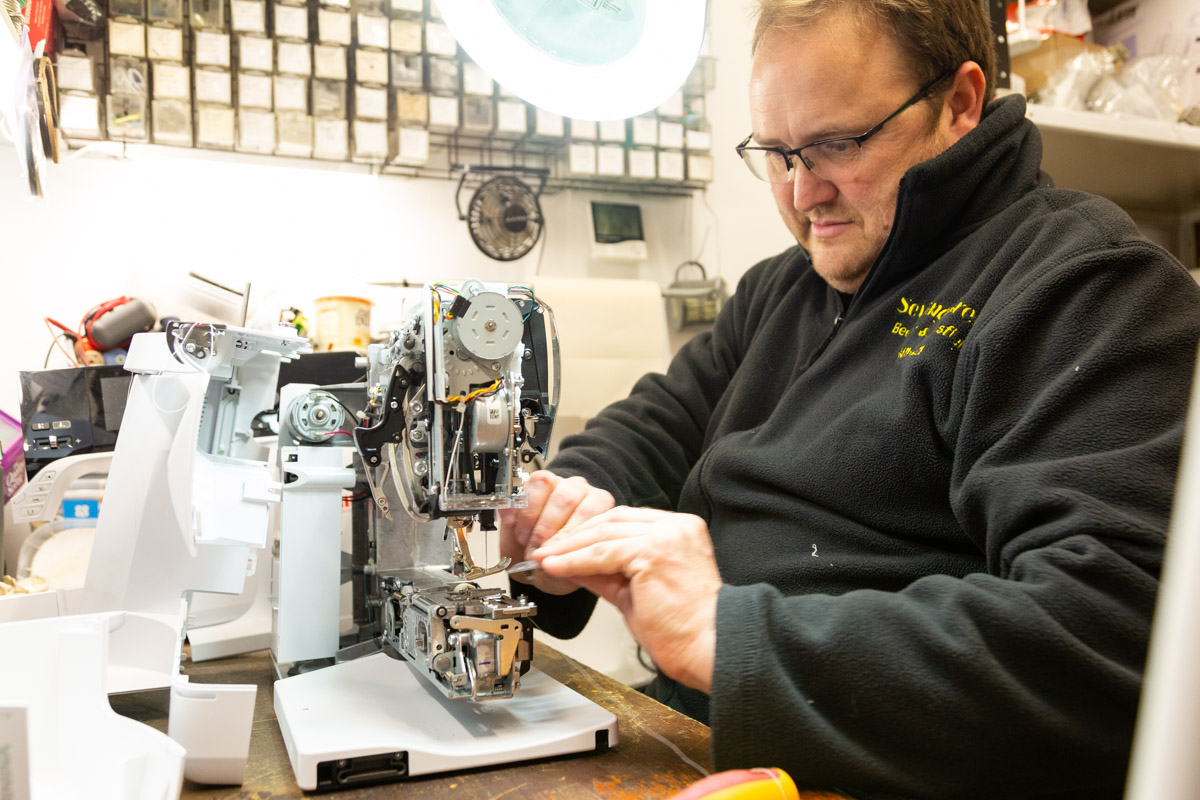
We completely strip the machine down, clean out lint, thread and debris, inspect the moving parts, lubricate where required, check timing, check tensions, recalibrate the machine and test everything thoroughly before it leaves the workshop.

In many cases, this process alone solves the customer’s problem.

What Sewing Machine Faults Do We See Most Often?

After repairing hundreds of sewing machines, certain faults appear time and time again.

Timing Issues

If your machine starts skipping stitches, breaking needles or struggling to form stitches correctly, the timing may have moved out.

In most cases, correcting the timing forms part of a full service and recalibration.

The good news is that this is almost always significantly cheaper than replacing the machine.

Tension Problems

Tension issues are one of the most common complaints we hear.

Customers often arrive convinced their machine has a serious fault when, in reality, the machine simply needs cleaning, recalibrating and adjusting correctly.

A full service normally resolves these problems.

Broken Gears

Broken gears can happen as machines age.

When this happens, we strip the machine down, replace the damaged gear and then service and recalibrate the machine.

Replacement gears typically cost around £15 each, plus the service charge.

Electrical Faults

Electrical faults can vary considerably.

We normally begin with a service and diagnostic inspection because many apparent electrical faults turn out to be something much simpler.

If additional parts are required, we provide a separate quotation before any further work is carried out.

Damaged Feed Dogs and Needle Plates

A broken needle can sometimes damage the feed dogs or needle plate.

While replacing the damaged part may be straightforward, we also recommend checking the machine’s timing and overall operation to ensure there is no hidden damage.

Overlocker Knife Replacement

Replacing overlocker knives is often something customers can do themselves.

However, if you want the machine checked, adjusted and calibrated at the same time, a full service is often worthwhile.

Why Many Customers Are Surprised By Repair Costs

One of the most common conversations we have goes something like this:

“Is it really worth repairing my machine?”

This question is particularly common with older sewing machines.

Many customers assume their machine is beyond repair because it is making unusual noises, feels clunky or is struggling with tension.

In reality, many of these machines simply need cleaning, lubricating and recalibrating.

Quite often, a machine that has not been serviced for several years can be transformed by a proper service.

Customers are frequently surprised that the cost of restoring their machine is nowhere near what they expected.

How Often Should A Sewing Machine Be Serviced?

In my opinion, servicing frequency should be based on how much you use the machine.

If you sew regularly, your machine should be serviced regularly.

As a general guide:

  • Heavy users may benefit from a service every six to twelve months.
  • Regular hobby sewers should consider annual servicing.
  • Occasional users can often leave it a couple of years between services.
  • If you are starting a major project, it can be worth servicing the machine beforehand.
  • Equally, after completing a large project, a service can help keep everything running smoothly.

Regular maintenance is always cheaper than waiting for problems to develop.

The Biggest Mistakes That End Up Costing Sewing Machine Owners Money

Over the years, we have noticed the same mistakes appearing again and again.

Attempting Repairs Using YouTube Videos

While some online tutorials are helpful, we regularly see machines that have suffered additional damage because someone attempted a repair without fully understanding the machine.

What started as a simple issue can quickly become a much bigger repair.

Using Cheap Thread

Cheap thread often creates more lint and fluff inside the machine.

Some lower-quality threads are also inconsistent and can contribute to tension problems and poor stitch quality.

Not Cleaning Around the Bobbin Area

Basic maintenance goes a long way.

Removing the needle plate, taking out the bobbin case and cleaning away lint with a brush can prevent many common issues.

Using Poor Quality Needles

A quality needle makes a huge difference.

Cheap needles can affect stitch quality, damage fabric and sometimes even contribute to machine problems.

Ignoring Problems

If a machine starts making unusual noises, struggling to sew or producing poor stitches, continuing to use it can sometimes make matters worse.

Getting it checked early often saves money in the long run.

What Makes Our Sewing Machine Repair Service Different?

There are plenty of places offering sewing machine repairs, but we believe there are several things that set us apart.

All Repairs Are Carried Out In-House

Every service and repair is completed in our own service centre.

Your machine is not being sent elsewhere for assessment.

We Service All Makes and Models

Whether you bought the machine from us or from somewhere else, we are happy to service and repair it.

Many customers are surprised to learn that they do not need to have purchased the machine from us.

Collection and Delivery Available

For customers who cannot easily bring their machine to us, we offer collection and delivery options.

Warranty Included

Every service comes with a three-month warranty.

Customers also have the option to upgrade to a twelve-month warranty for additional peace of mind.

Decades of Experience

There are very few faults we haven’t seen before.

Having worked on sewing machines for many years, we can often identify common problems quickly and recommend the most cost-effective solution.

Is It Worth Repairing A Sewing Machine?

This is probably the question people are really asking when they search for sewing machine repair costs.

My honest answer is:

It depends.

If you are happy to spend £200 or more on a replacement machine, then buying a new machine may be the right choice. A new machine comes with a manufacturer’s warranty and all the benefits that go with it.

However, you should also consider what a like-for-like replacement would cost.

If your current machine originally cost £2,000, replacing it with something of similar quality could be very expensive.

In many cases, servicing and repairing the existing machine is by far the more economical option.

When machines become very old, our approach is simple.

If parts are still available, we will usually try to keep the machine running.

Many older sewing machines are exceptionally well built and can continue working for many years with proper maintenance.

There is also the sentimental value to consider.

Some customers inherited their machine from a parent or grandparent. Others have owned it for decades and simply don’t want to part with it.

That is perfectly understandable, and in many cases, we can help keep those machines running, too.

Final Thoughts

For most sewing machine owners, a professional service is significantly cheaper than buying a replacement machine.

Many common faults, including tension problems, timing issues and poor stitch quality, can often be resolved during a routine service.

If your machine is not sewing properly, making unusual noises, or hasn’t been serviced in several years, it may be worth having it inspected before deciding to replace it.

You might be surprised at how much life is left in your sewing machine.

Are You Looking for an Air-thread Overlocker? Why the Baby Lock Enspire Should Be on Your Shortlist

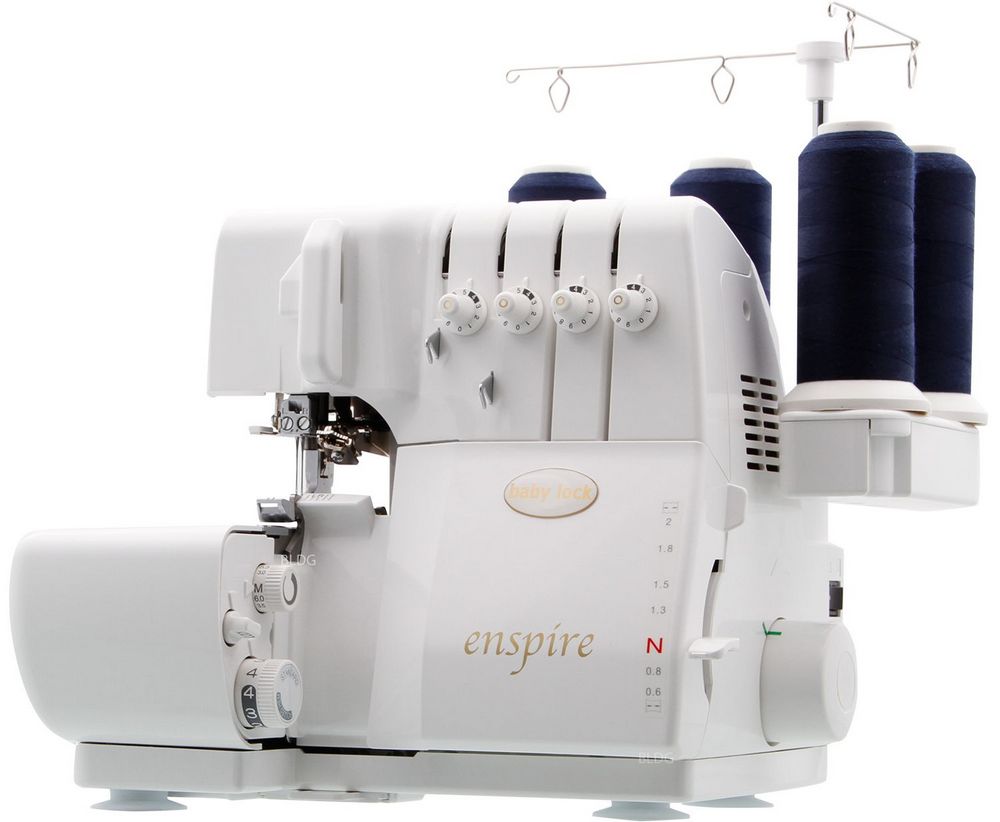
If you’re looking for an air-thread overlocker, then we seriously recommend the Baby Lock Enspire as one of the top machines to consider.

At Sewing Direct, we’ve spent a lot of time working with overlockers from different brands, and one thing we’ve consistently found with the Enspire is just how easy and enjoyable it is to use. It combines the fantastic build quality and reliability that Baby Lock is known for, with features that genuinely make sewing simpler and less intimidating.

Small Footprint, Big Features

One of the first things people notice about the Enspire is its size. It has a very compact footprint, meaning it doesn’t take over your sewing space. That makes it ideal for smaller sewing rooms, craft spaces, or anyone who wants an overlocker that can easily sit alongside their sewing machine without dominating the table.

Despite the compact size, it still packs in all the key features you’d expect from a premium air-thread overlocker.

Air Threading Makes Life So Much Easier

Let’s be honest — threading an overlocker is one of the things that puts many people off buying one in the first place.

That’s where the Enspire really shines.

The air-threading system makes threading the loopers incredibly quick and straightforward. Instead of struggling with tweezers and awkward thread paths, you simply place the thread in the port and let the machine do the hard work.

For many customers, this completely removes the fear of rethreading the machine.

Whether you’re changing colours regularly or just want a stress-free setup, the air-thread system is one of those features you very quickly wonder how you ever lived without.

Easy Needle Threaders

The Enspire also features built-in needle threaders, which are very easy to use.

If you’ve used a sewing machine needle threader before, the system will feel very familiar. You simply pull the lever down, and a small hooked mechanism passes through the eye of the needle to help pull the thread through.

Of course, if you prefer traditional threading, you can still thread the needles manually — the choice is yours.

Fantastic Stitch Quality Across Different Fabrics

One thing we’ve found through experience is just how consistent the stitch quality is across a wide range of fabrics.

The front-mounted tension controls are easy to adjust, but in reality, many users won’t find themselves changing the tensions very often because the Enspire handles fabric changes so well.

From lightweight fabrics through to thicker materials, the stitch consistency is genuinely impressive.

That makes the machine particularly good for people who sew a variety of projects and don’t want to spend ages constantly fine-tuning settings.

Packed With Useful Features

The Enspire also includes all the essential features you’d expect from a quality overlocker, including:

  • Differential feed
  • Adjustable stitch width
  • Adjustable stitch length
  • Rolled hem capability

One feature we particularly like is the movable rolled hem finger. Instead of needing to remove parts or accessories, the finger simply moves out of the way when required — a very clever and user-friendly feature that’s become something of a signature feature on Baby Lock machines.

Final Thoughts

If you’re searching for an overlocker that is compact, easy to thread, simple to use, and produces consistently beautiful stitches, then the Baby Lock Enspire is absolutely worth considering.

It’s a machine that removes many of the frustrations people traditionally associate with overlockers and replaces them with a sewing experience that feels smooth, straightforward, and enjoyable.

If you’d like to see the machine in action, make sure to watch our accompanying YouTube video below where we take a closer look at the features and show you why it has become such a popular choice with our customers.

Click to buy –

baby lock Enspire Overlocker

£895.00

Free Baby Lock Training Day at our Mansfield Training Centre when you buy your new Baby Lock from us.
FREE Delivery within 2 Days of Placing the order
Lifetime Support when you buy your machine from SewingDirect.co.uk
2 Brick-and-mortar shops for in-store demonstration

Are you looking to spread the cost of your new Baby Lock?
We have teamed up with Baby Lock UK and can offer you their finance deals.

Spread the cost of your order.

Representative Example:
Cost Of Goods / Services £885.00
Deposit £300.00
Loan Amount £585.00
Term 11 months
Monthly Repayments £53.81
APR (Fixed) 0.0%
Total Charge For Credit £0.00
Total Repayable £885.00

In Stock

What’s Included in a Sewing Machine Service?

What’s Included in a Sewing Machine Service?

One of the most common questions we get asked at Sewing Direct is: “What’s actually included in a sewing machine service?”

And honestly, it’s a fair question.

A lot of people imagine a service is just a quick clean and a drop of oil. In reality, a proper sewing machine service is far more involved than that, especially on modern computerised machines.

For us, servicing a sewing machine is about returning it back to how it should sew from the factory. It’s not just about making it cleaner. It’s about making it sew properly again.

The First Step: Finding Out What the Machine Is Actually Doing

One thing customers often say is:

“It probably just needs a service.”

Sometimes they’re right. Sometimes there’s a much bigger issue hiding underneath.

Before we touch a screwdriver, we always do a sew test first. That tells us what the machine is actually doing before we strip it down.

We’re checking things like:

  • Stitch quality
  • Tension balance
  • Noise levels
  • Timing issues
  • Skipped stitches
  • Thread shredding
  • Rough or stiff movement

That first sew sample tells you a huge amount about the condition of the machine.

Find out about our Sewing Machine service centre – Click here

Then the Strip-Down Begins

A proper service is not just removing the bobbin case and brushing a bit of fluff out.

We fully strip the machine down to what is essentially the bare carcass of the machine without unnecessarily removing major assemblies.

Once inside, we commonly find:

  • Huge build-ups of lint and fluff
  • Broken needle tips
  • Pins trapped inside the machine
  • Old grease that has hardened
  • Dry mechanisms needing lubrication
  • Timing issues
  • Tension problems
  • Wear caused by heavy use
  • Damage from people tinkering with the machine

You can often tell how a machine has been used just by opening it up.

Cheap thread tends to leave huge amounts of lint and fluff behind. School machines often come in with seized buttons or stitch functions that no longer work properly. Machines that haven’t been cleaned regularly are usually obvious the second the covers come off.

Cleaning, Greasing & Recalibration

Once the machine is stripped down, the old grease is removed and replaced with fresh grease and oil where required.

This is an important point that many people misunderstand.

A lot of customers oil their own machines at home, which is absolutely fine but you can only oil the areas the manufacturer gives you access to. The important components are hidden underneath the machine’s covers.

That’s why professional servicing requires a full strip-down.

Once lubricated, the machine is recalibrated and adjusted back into specification. Depending on the machine, this may involve:

  • Tension adjustments
  • Timing adjustments
  • Mechanism alignment
  • Feed adjustments
  • General recalibration

The Sew Test Matters More Than People Think

After reassembly, we sew test the machine again.

And this is where experience matters.

If the machine still doesn’t feel right, sew right, or sound right, we go back in again. Sometimes a machine has to be stripped down more than once before we’re completely happy with it.

A good sewing machine service isn’t just:

“The machine turns on.”

A properly serviced machine should:

  • Sew smoothly
  • Run quieter
  • Feel smoother to use
  • Produce consistent stitches
  • Operate reliably

Only once we’re happy with the final sew sample do we complete the final clean and inspection.

Find out about our Sewing Machine service centre – Click here

Warning Signs Your Machine May Need a Service

Some of the most common early warning signs include:

  • The machine getting noisier
  • Inconsistent tension
  • Skipped stitches
  • Thread shredding
  • A stiff handwheel
  • Sluggish running
  • Poor stitch quality

One of the biggest mistakes people make is waiting until the machine becomes almost unusable before bringing it in.

Like a car, regular servicing helps prevent bigger problems later on.

How Often Should You Service a Sewing Machine?

There isn’t a one-size-fits-all answer.

It really comes down to frequency of use.

If you use your machine heavily or regularly, we’d generally recommend a yearly service.

If you use it occasionally or inconsistently, every couple of years is usually fine.

If you only sew for major projects, it’s a good idea to have the machine serviced before or after a large project rather than waiting until something goes wrong halfway through.

Why Use a Professional Instead of Doing It Yourself?

The honest answer?

Because we know how to take the machine apart and put it back together properly.

It’s the same as taking your car to a mechanic.

Yes, there’s basic maintenance you can do yourself at home, and we actively encourage customers to keep their machines clean. But a full professional service involves complete disassembly, inspection, lubrication, adjustment, recalibration, and testing.

It’s something we do every single day.

And unfortunately, we regularly see machines that have previously been worked on incorrectly elsewhere including machines that have been dismantled and reassembled incorrectly, creating even bigger problems than they originally had.

A proper service is about experience, attention to detail, and knowing what the machine should feel like when it’s right.

And when you get your machine back sewing smoothly, quietly, and properly again you can absolutely tell the difference.

Find out about our Sewing Machine service centre – Click here

What Is the Best Sewing Machine to Buy for Under £600?

What is the Best Sewing Machine to buy for under £600?

One of the most common questions we get asked in the shop is:

“What’s the best sewing machine I can buy for under £600?”

The honest answer is… There isn’t one single “best” machine for everybody.

At Sewing Direct, we spend a lot of time helping people choose the right machine for them, rather than simply trying to sell the most expensive model possible. A £600 budget is actually a really good place to be because it opens the door to some genuinely capable sewing machines that can last for years and allow you to grow your skills.

The first thing we always ask customers is:

“What do you actually want the machine to do?”

Are you mainly doing repairs and alterations? Dressmaking? Quilting? Craft work? Soft furnishings? Or are you completely new to sewing and looking for a machine you can learn and grow with?

Because the reality is that the best sewing machine under £600 for one person could be completely wrong for somebody else.

The Machine I Keep Recommending

If I had to pick one machine in this price range that I recommend time and time again, it would probably be the Brother Innov-is A150.

Why?

Because it’s packed full of genuinely useful features without becoming intimidating or overly complicated.

You get:

  • Automatic thread cutting
  • A fantastic needle threader
  • A really good selection of stitches
  • Simple controls
  • Easy-to-follow menus
  • A hard case included
  • A machine that feels capable without being overwhelming

One thing I tell customers all the time is that people worry far too much about computerised machines being “too technical.”

Honestly, if you can dial a number on a telephone, you can use this machine.

That’s one of the biggest strengths of the A150 — it’s incredibly easy to navigate. The buttons make sense, the layout makes sense, and people quickly gain confidence using it.

Why Ease of Use Matters More Than Specs

A lot of people buy sewing machines based purely on specifications:

  • How many stitches it has
  • Whether it has a screen
  • Fancy features they may never use

But in real life, what matters is whether you actually enjoy using the machine.

One of the things I’ve learned from years of selling sewing machines is that people don’t want a machine that makes them nervous every time they switch it on.

They want something intuitive.

The Brother range does this really well because the systems and layouts are consistent across the range. If somebody starts with an A150 and later upgrades to a higher-end Brother sewing or embroidery machine, the menus and operating style still feel familiar.

That makes the learning curve much easier.

The Feature People Fall in Love With

Without question, one of the biggest “wow” features for customers is the automatic thread cutter.

People are so used to constantly reaching for scissors that when they see the machine simply cut the threads itself, they absolutely love it.

It sounds like a small thing, but when you sew regularly, those little quality-of-life features make a massive difference.

The needle threader is another one.

A bad needle threader can be fiddly, frustrating, and enough to put people off sewing altogether. The A150’s system is incredibly straightforward. You line everything up, pull the lever down, and it just works.

Simple things matter.

Buy a Machine You Can Grow Into

One mistake people make is buying a machine they’ll outgrow too quickly.

A sewing machine isn’t just for what you sew today — it’s for what you might want to sew six months or two years from now.

Somebody might start off doing basic alterations and then suddenly discover quilting, bag making, dressmaking, or even embroidery later on.

That’s why versatility matters.

You want a machine that gives you room to grow creatively rather than one that limits you.

At this sort of budget, I would almost always recommend going for a computerised machine rather than a mechanical one. Realistically, machines at this level tend to be larger, more feature-packed, and more versatile than smaller mechanical models.

And despite what many people think, modern computerised machines are often easier to use.

Don’t Waste Good Fabric with Cheap Accessories

This is something a lot of articles never mention.

You can spend hundreds of pounds on a good sewing machine and loads of money on beautiful fabric… but still get poor results if you use cheap thread, bad needles, or low-quality haberdashery.

Good-quality thread and needles make a huge difference.

As somebody who also sees machines come in for servicing and repairs, I can honestly say poor consumables cause far more problems than many people realise.

Final Thoughts

If you’re spending up to £600 on a sewing machine, my advice would be this:

Spend as much of your budget as you comfortably can to get the best machine in its class for the type of sewing you want to do.

But also think ahead.

Your skills will improve.
Your interests will change.
You’ll probably want to try different types of sewing over time.

The ideal sewing machine is one that grows with you.

Because ultimately, people don’t want to be limited by the machine — they want to be limited only by their own creativity.

Dunc’ Dribbles… Bernina May offers

Here we have it, if you are looking for a new Bernina Sewing machine, then these offers might well tantalise your taste buds.

It’s a while stocks last, or by the end of May, which is the 31st, 790 PRO – Free Embroidery Unit Saving you over £1000.00
https://sewingdirect.co.uk/product/bernina-790-pro-sewing-embroidery-machine/

Bernina L-850 -Special Offer £1995 Saving you £500.00 /
https://sewingdirect.co.uk/product/bernina-overlocker-machine-l850/

Bernina L890 QE Special Offer £4245 – Saving you £250
https://sewingdirect.co.uk/product/bernina-l890-overlocker-coverstitch-combi-machine/ Bernette Sewing

Machine offers b-44 Funlock Special Offer £395 – Saving you £80 https://sewingdirect.co.uk/product/bernette-funlock-44-overlock/

b-33 Special Retail £199. Saving £30
https://sewingdirect.co.uk/product/bernette-33-sewing-machine/

b-48 Special Retail £645 Saving you £100.00
https://sewingdirect.co.uk/product/bernette-funlock-48-overlocker-coverstitch/

b-68 Combi Free Mini Vacuum Cleaner
https://sewingdirect.co.uk/product/bernette-b68-air-thread-overlock-coverstitch/


#sewing #bernina #berninasewing #sewingtutorial #sewingmachine #sewinghacks #sewingprojects #nottinghamforest #nottingham

Looking for reliable care for your Brother PR or VR embroidery machine?

Looking for reliable care for your Brother PR or VR embroidery machine? At Sewing Direct, we know how vital your machine is—whether you’re creating for your business or simply for the love of embroidery. That’s why we’re excited to offer expert servicing and repairs for Brother PR and VR models, now with a speedy 7-day turnaround tailored for our business customers.

Forget the hassle of transporting your machine. With our easy collection and delivery service, you can have your embroidery machine serviced without ever leaving your home or workspace. Just schedule your booking, and our skilled technicians will do the rest, using genuine Brother parts to maintain your machine’s peak performance.

Regular servicing is the secret to keeping your embroidery running smoothly and avoiding unwanted downtime. You can trust Sewing Direct to treat your machine with care and precision—plus, every service is backed by a 3-month guarantee for your peace of mind.

Don’t let unexpected issues disrupt your creative flow. Book your Brother PR or VR embroidery machine service today for fast, dependable repairs with zero fuss. Learn more and secure your booking here:

https://sewingdirect.co.uk/brother-vr-pr-embroidery-machine-service-maintenance/

Sewing Direct – your local embroidery machine experts, dedicated to keeping you stitching confidently.

Click here to find us –

Bernina December 2025 Offers

Bernina December Offers Now Live – Don’t Miss Out!

December has arrived, and so have this month’s fantastic Bernina offers at Sewing Direct! Whether you’re looking for a new top-of-the-range sewing machine, a compact model for everyday sewing, or the latest must-have sewing guide, there’s something for every maker this month.

Spotlight: The Big Book of Fashion Sewing – A Must-Have for Every Sewist

If you’re planning to improve your garment-making skills in 2025, the brand-new Big Book of Fashion Sewing is the perfect place to start.
This comprehensive guide is packed with clear, step-by-step techniques for pattern work, fitting, seams, zips, hems and achieving professional finishes on your handmade clothes.

It’s ideal for Bernina users, dressmakers, and anyone who wants to create garments with confidence – from first stitches to final details. With the book newly released and expected to be a bestseller, now is the perfect time to grab your copy while stocks last.


Bernina 990 – Premium Precision, Now with a December Offer

The flagship Bernina 990 is included in this month’s promotions, giving you the chance to invest in one of the most advanced sewing and embroidery machines on the market. With unmatched stitch quality, huge workspace and intuitive features, it’s a dream for quilters, dressmakers and professional creators alike.


Bernina 335 – Compact, Reliable and Brilliant for Everyday Sewing

Perfect for beginners, students and hobby sewists, the Bernina 335 combines sturdy engineering with easy-to-use functions. If you’re looking for a dependable machine at a great December price, this is a fantastic choice.


A Wide Range of Bernina Offers Across December

From accessories to high-end machines, this month’s deals offer something for every level and budget. Whether you’re upgrading, gifting, or treating yourself, it’s an excellent time to explore the Bernina range at Sewing Direct.

Bernina S-540 Sewing Machine ** Dec Offer Free Trolley Bag Worth £250.00 **

Bernina S-570qe Sewing Machine ** Dec Offer Free Trolley Bag Worth £250.00 **